
Contents [ Hide ]
- 1 Can Drug Dogs Smell Weed? The Short Answer
- 2 How Strong Is a Dog’s Sense of Smell?
- 3 Classic Masking Myths and Why They Fail
- 4 Detection Difficulty by Cannabis Form
- 5 Can Drug Dogs Smell Edibles and Vapes?
- 6 Can Dogs Smell Weed Through Smell-Proof Bags?
- 7 What Compounds Are Dogs Actually Trained to Detect?
- 8 Canadian Legal Context and Dog Training After Legalization
- 9 Do Dogs Ever Miss Cannabis?
- 10 Safe and Legal Reality Check
- 11 Reality Check and Conclusion
Can Drug Dogs Smell Weed? The Short Answer
Yes, trained drug dogs can smell weed. Their noses detect the volatile terpenes and aromatic compounds released by cannabis at concentrations far below what any human can perceive, often in the parts-per-trillion range. Masking attempts with coffee grounds, cologne, vacuum seals, or food almost never succeed against a properly trained detection dog.
Everyone seems to have a friend who swears by a secret method for hiding the smell. Coffee beans, peanut-butter jars, dryer sheets, double vacuum bags, industrial-strength cologne — the list of folk remedies is long. The reality is simpler and less convenient: a trained canine’s olfactory system operates on an entirely different scale from ours. This article explains what dogs actually detect, why common masking strategies fail, how edibles and vapes fit into the picture, and what the legal landscape looks like in Canada.
How Strong Is a Dog’s Sense of Smell?
Canine Olfactory Advantage
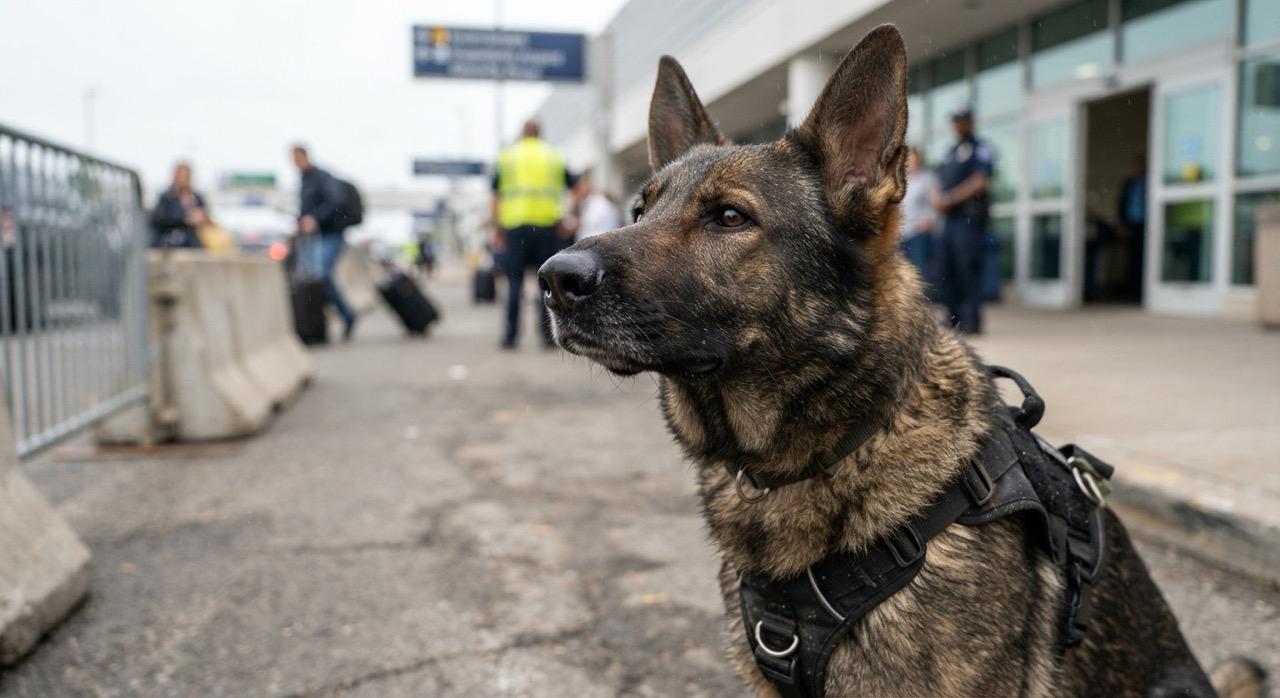
A dog’s nose contains roughly 125–300 million scent receptors depending on breed; humans have about 5–6 million. The portion of a dog’s brain devoted to analyzing smell is proportionally much larger than ours. Studies of canine olfactory thresholds show detection of certain compounds at concentrations as low as 1–2 parts per trillion under field conditions — roughly equivalent to a single drop of liquid in twenty Olympic swimming pools.
How Dogs Process Complex Scents
Dogs do not smell “one big odor” the way people do. They parse complex scent mixtures into individual chemical components, much like separating instruments in an orchestra. When a detection dog encounters a bag that contains both coffee and cannabis, it can isolate the cannabis-related volatiles from the coffee notes. Strong competing smells rarely overwhelm the target odor; they simply become additional layers the dog processes.
What Does Weed Smell Like to Dogs?
What does weed smell like to dogs? The primary signals are volatile organic compounds, especially terpenes such as beta-caryophyllene, caryophyllene oxide (formed during drying and curing), pinene, myrcene, and limonene. THC itself has very low volatility and contributes little to the airborne scent. Dogs are trained on the overall odor profile of cannabis plant material, not on pure THC.
Classic Masking Myths and Why They Fail
Attempts to hide weed from drug dogs or hide weed smell from dogs almost always rely on one of a few approaches. None hold up under scientific scrutiny.
Coffee Grounds, Food, and Strong Scents
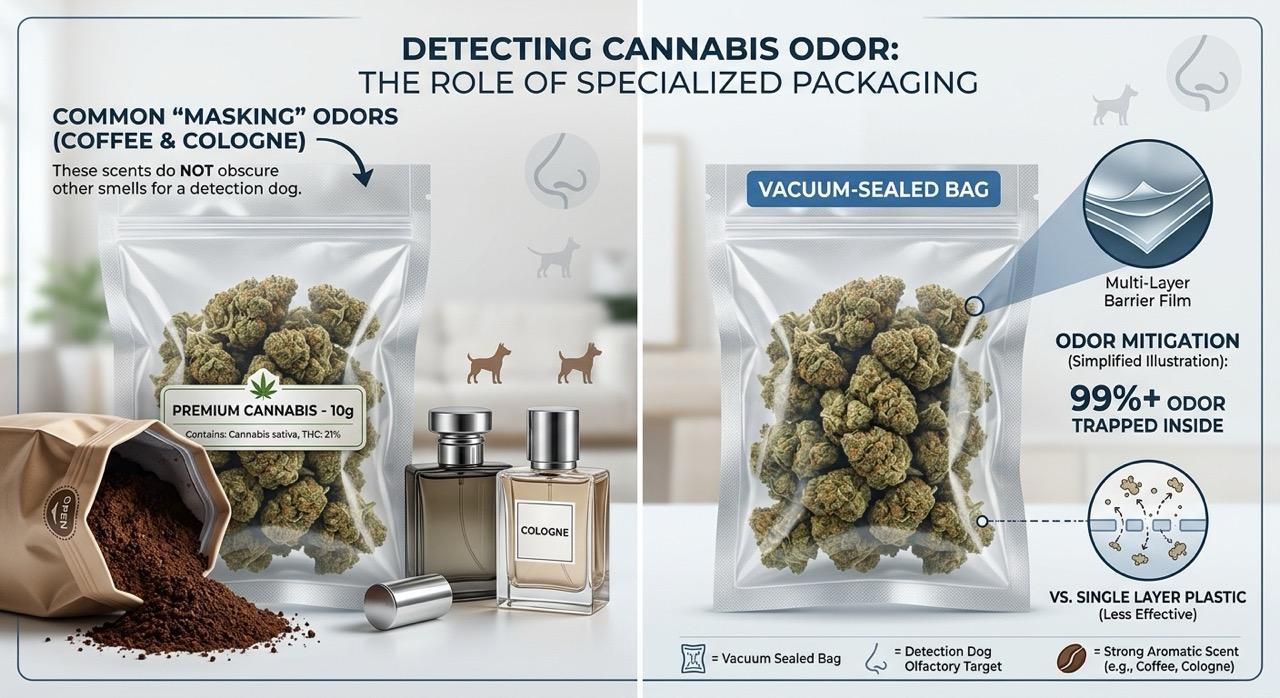
Packing cannabis with coffee, peanut butter, meat, or spices is a long-standing idea. Dogs are highly motivated by food odors, but they are also trained to ignore distractors and lock onto the specific target scent. Adding food often simply gives the dog more reason to investigate the package thoroughly. The cannabis terpenes remain detectable alongside the food volatiles.
Cologne, Perfumes, and Fabric Softener
Heavy application of cologne or dryer sheets may mask the smell for human noses. Dogs separate the perfume molecules from the cannabis molecules. The result is two distinct scent tracks rather than a single covered odor.
Vacuum Sealing and Multiple Layers
Vacuum sealing reduces the amount of scent that escapes quickly, which is why it can fool people. Most common plastics, however, are permeable to small volatile organic compounds over time. Research on human detection of packaged cannabis found that double vacuum-sealed samples were often below the threshold of human smell, yet trained dogs continue to alert on sealed material in many operational settings. Residual scent also clings to hands, clothing, and outer packaging, creating a trail even if the primary container is well sealed.
Other popular items — mothballs, onions, chili powder — produce the same outcome: an additional scent layer that a trained dog simply works around.
Detection Difficulty by Cannabis Form
Not all cannabis products present the same challenge to a detection dog. The table below summarizes relative detection likelihood based on volatile terpene content, surface area, and typical packaging.
| Product Type | Volatile Terpenes | Competing Scents | Typical Detection Likelihood | Key Notes |
|---|---|---|---|---|
| Dried Flower | High | Low | Very High | Easiest for dogs; strong natural odor profile |
| Hash / Concentrates (full-spectrum) | Medium–High | Low–Medium | High | Retains many plant volatiles |
| Vapes / Cartridges | Low–Medium | Medium (flavorings) | Moderate | Depends on terpene content and residual plant material |
| Edibles (gummies, baked goods) | Low | High (sugar, flavors, food) | Lower / Variable | Processing reduces terpenes; still possible via residual compounds or packaging leaks |
| Distillate / Isolate | Very Low | Low | Lowest | Minimal aromatic compounds left after refining |
Do Edibles Smell to Dogs?
Do edibles smell to dogs? Yes, but less reliably than flower. The manufacturing process that turns cannabis into edibles — extraction, decarboxylation, and mixing with food ingredients — significantly reduces the concentration of the volatile terpenes dogs are trained to recognize. Competing food aromas further complicate the scent picture. Residual terpenes, imperfect seals, and external contamination can still produce an alert.
Can Drug Dogs Smell Edibles and Vapes?
Controlled observations and handler reports indicate that alert rates on commercially produced edibles are lower than on flower, sometimes substantially so. However, residual terpenes, the presence of cannabis-derived oils or distillates, imperfect seals, and external contamination can still produce an alert. How to hide edible smell from dogs is therefore not a solved problem; the reduced odor simply makes detection less consistent, not impossible.


Vapes and Concentrates
Vapes and concentrates present a mixed picture. High-terpene live resins or full-spectrum extracts retain more of the aromatic profile and are more readily detected. Distillate-heavy or heavily flavored cartridges with low residual plant volatiles are harder. Packaging quality and recent handling remain decisive factors.
Can Dogs Smell Weed Through Smell-Proof Bags?
Can drug dogs smell weed through sealed packaging? In many cases, yes. Even products marketed as “smell-proof” or multi-layer Mylar bags allow some molecular permeation over time. Vacuum sealing slows escape but does not create a perfect molecular barrier with ordinary consumer materials. Dogs have been documented alerting on cannabis contained in multiple layers of plastic. Residue on the exterior of the bag, on hands, or on clothing often provides an easier path for detection than the contents themselves.
A 2020 study in Science & Justice showed that untrained human observers could not reliably detect double-vacuum-sealed cannabis by smell, yet operational experience with trained canines continues to demonstrate alerts on well-packaged material. The difference lies in sensitivity and training specificity.
What Compounds Are Dogs Actually Trained to Detect?
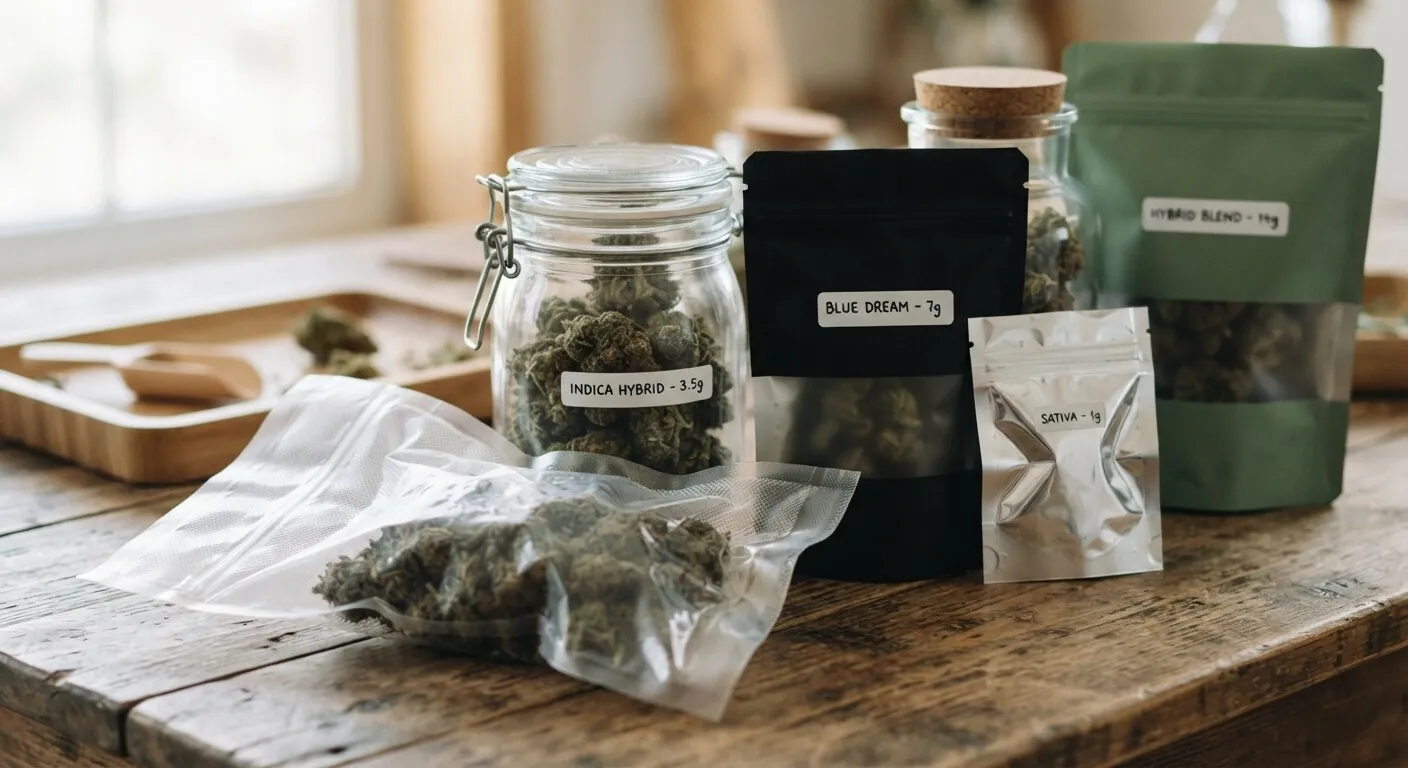
Detection dogs are not trained on pure THC. They are imprinted on the complex headspace odor of cannabis samples — primarily terpenes and related volatile compounds. Caryophyllene oxide, formed as beta-caryophyllene oxidizes during drying and curing, is frequently cited as a key marker. Pinene isomers, myrcene, limonene and a host of lesser compounds complete the signature. This is why pure THC isolate or heavily refined distillates with minimal residual terpenes can be more difficult to detect than flower or full-spectrum products.
Residual Odor
The same chemistry explains why residual odor can linger on surfaces, clothing, or in a vehicle long after the cannabis itself has been removed. Studies have shown residual cannabis odor remaining detectable for at least 24–48 hours in some controlled tests.
Canadian Legal Context and Dog Training After Legalization
Cannabis is legal for adults in Canada within possession limits (generally 30 grams of dried flower or equivalent in public). That legal status changes the practical meaning of a dog alert in many domestic situations, but it does not eliminate detection dogs.
Changes in Training After Legalization
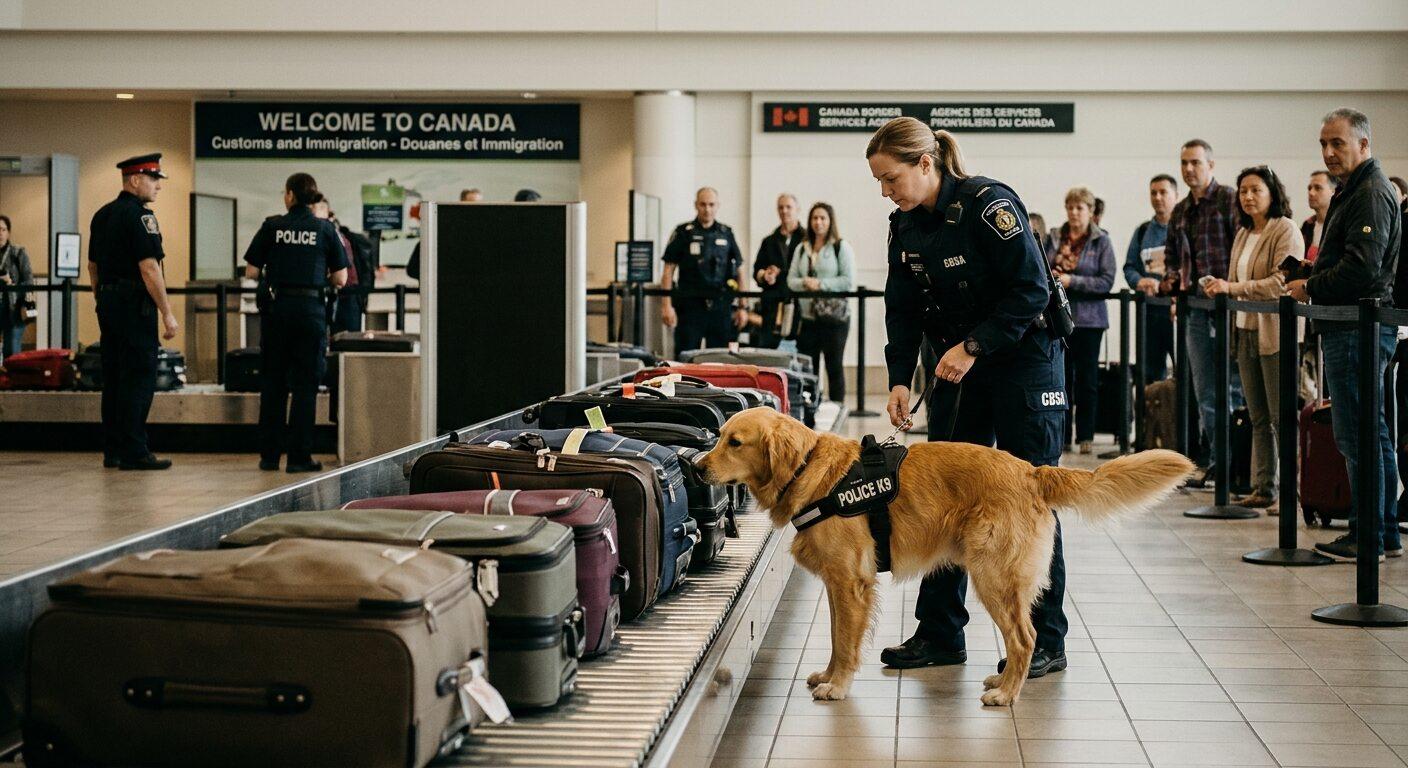
After legalization, many RCMP and provincial police services stopped imprinting new dogs on cannabis and focused training on substances that remain fully prohibited (cocaine, heroin, methamphetamine, fentanyl, MDMA, etc.). Older dogs trained before 2018 may still respond to cannabis. Border agencies such as the Canada Border Services Agency continue to deploy detector dogs for a range of contraband, and international travel rules treat cannabis as prohibited regardless of Canadian domestic legality.
Workplaces and Regulated Environments
Workplaces, correctional facilities, and certain regulated environments may still use dogs under zero-tolerance policies. An alert can still lead to further search, questioning, or employment consequences even when personal possession is otherwise lawful.
For more on the rules that apply when moving around the country, see our guide on what you need to know about traveling with cannabis.
Do Dogs Ever Miss Cannabis?
Yes. Dogs are living animals, not machines. Fatigue, environmental conditions, handler cues, competing odors, and individual variation all affect performance. Peer-reviewed work has reported correct indication rates around 87–88 % in controlled indoor settings, with lower accuracy in vehicles or complex outdoor environments and a small percentage of false alerts or misses. Residual odor can also produce an alert where no current cannabis is present. These limitations exist, yet they do not make casual masking strategies reliable.
Safe and Legal Reality Check
Trying to outsmart a trained detection dog is a low-percentage strategy. The more practical approach is to stay within the legal framework that already exists in Canada:
- Keep possession within the legal limits.
- Do not attempt to take cannabis across international borders — flower, edibles, concentrates, or seeds.
- Understand that workplaces, prisons, and some private property can enforce stricter rules than the Cannabis Act.
- Choose products and storage methods that prioritize quality and discretion for ordinary day-to-day use rather than for defeating canine detection.
If you are shopping for discreet, lab-tested options, explore the range of cannabis edibles and flower available through reputable Canadian sources. Understanding terpene profiles can also help you select lower-odor cultivars when that matters for personal preference; see our overview of how to read cannabis labels for more on what those compounds mean.
For broader context on how scent and quality relate to the products themselves, the companion piece on good weed vs bad weed covers visual and aromatic indicators of fresh flower.
External resources for further reading include the National Institute on Drug Abuse cannabis overview and the Canada Border Services Agency Detector Dog Service program page.
Reality Check and Conclusion
Every popular method for how to hide weed from drug dogs or how to hide weed from dogs runs into the same biological fact: a trained detection dog’s nose is orders of magnitude more sensitive than a human’s and is specifically conditioned to isolate cannabis-related volatiles. Coffee, cologne, vacuum bags, and food scents add layers; they do not erase the target molecules. Edibles reduce the odor load but do not eliminate it. Sealed packaging slows release but rarely creates a perfect barrier.
The reliable strategy is the legal one. Stay within Canadian possession limits, avoid international borders with any cannabis product, and treat detection dogs as the highly capable working animals they are rather than as obstacles to be outsmarted. Enjoy your cannabis without the unnecessary stress of trying to beat a system that is built to win that particular contest.
Frequently Asked Questions
Q: Do edibles smell to drug dogs?
A: Yes, but less reliably than flower. Processing reduces the volatile terpenes dogs are trained to detect, and food ingredients create competing scents. Residual compounds and packaging leaks can still produce an alert.
Q: What compounds are dogs trained to detect?
A: Primarily terpenes and related volatile organic compounds such as beta-caryophyllene, caryophyllene oxide, pinene, myrcene and limonene — not THC itself, which has low volatility.
Q: Can drug dogs smell weed through sealed packaging?
A: Often yes. Most consumer plastics allow some permeation of scent molecules over time. Residual odor on the exterior or on clothing frequently provides an easier detection path than the sealed contents.
Q: Does legalization change dog training?
A: In Canada, many police services stopped training new dogs on cannabis after legalization and focused on other drugs. Older dogs and certain border or specialized teams may still respond to cannabis. Legal status does not remove all detection capability.
Q: Can masking scents fool detection dogs?
A: No, not reliably. Dogs parse complex odor mixtures into individual components. Coffee, cologne, food, or fabric softener simply become additional layers the dog can separate from the cannabis signature.
Q: How long does weed odor linger?
A: Residual cannabis odor can remain detectable on surfaces, clothing or in vehicles for at least 24–48 hours in controlled tests, and sometimes longer depending on conditions and quantity.
