
Contents [ Hide ]
- 1 How to Stop Nausea from Edibles: Causes, Relief & Prevention
- 2 How to Stop Nausea from Edibles
- 3 Why Do Edibles Make You Dizzy? (Why Do Edibles Make Me Nauseous)
- 4 Other Side Effects
- 5 How Long Does Edible Nausea Last?
- 6 Can Edibles Make You Nauseous the Next Day?
- 7 Why Do Gummies Make Me Nauseous?
- 8 Prevention Tips for Next Time
- 9 Learn More
- 10 Medical Disclaimer
How to Stop Nausea from Edibles: Causes, Relief & Prevention
What to do right now if edibles make you nauseous:
- Sit or lie down in a quiet, dim space and close your eyes.
- Breathe slowly — deep, steady breaths help calm the system.
- Sip water or electrolytes — avoid alcohol and caffeine.
- Try CBD under the tongue if you have it on hand.
- Wait it out — most nausea from edibles eases within a few hours.
Edibles can deliver a powerful, long-lasting high. They can also leave some people feeling dizzy, nauseous, shaky, or worse. If you have ever taken a cannabis edible and suddenly felt the room spin or wondered “why do edibles make me nauseated,” you are not alone. This experience is common, especially with higher doses or when your body processes the THC differently than expected.
This guide shows you how to stop nausea from edibles, explains why it happens, covers how long edible nausea lasts, and answers whether edibles can make you nauseous the next day. Understanding the process helps you recover faster and enjoy edibles more safely next time.
How to Stop Nausea from Edibles
You cannot instantly erase a strong edible high, but you can make the experience more manageable. Time is the primary factor — your body must metabolize the remaining THC and 11-hydroxy-THC. For additional practical strategies focused specifically on stomach discomfort, see our guide on nausea from edibles and how to stop it.

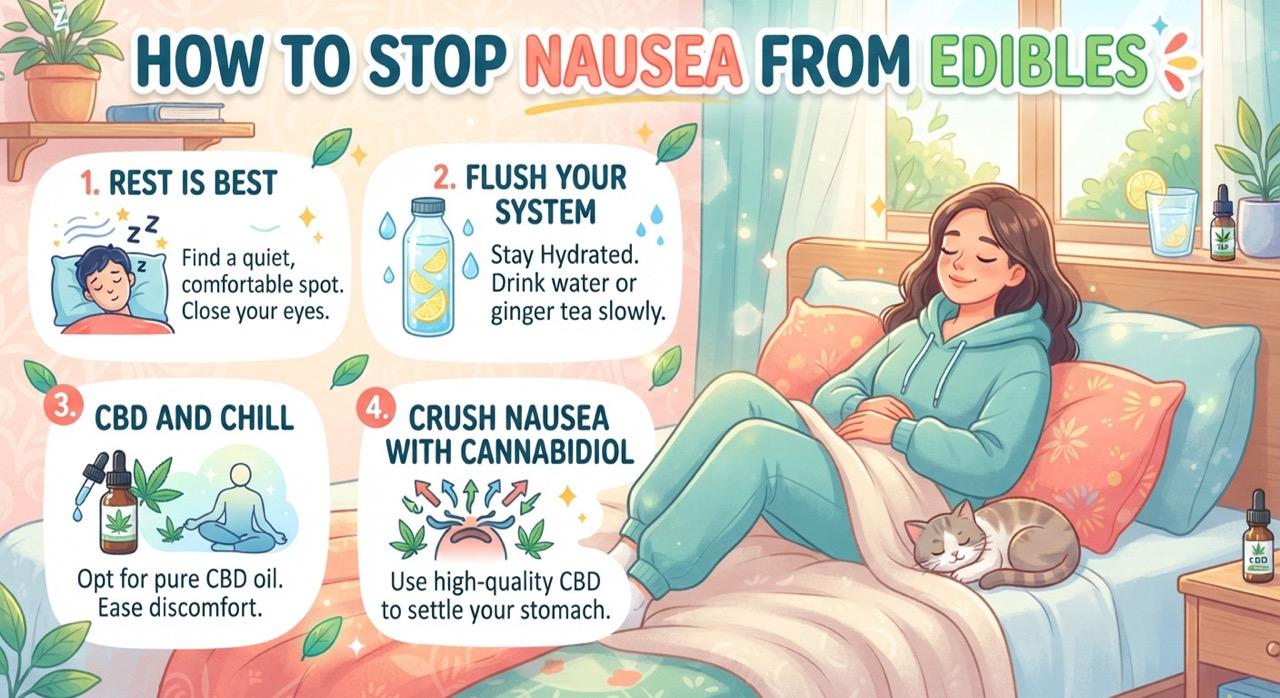
Rest Is Best
Sit or lie down in a quiet, dimly lit space. Close your eyes to reduce visual spinning. Slow, steady breathing helps regulate the nervous system. Avoid scrolling on your phone or engaging in stimulating conversation until the intensity drops. Changing position slowly reduces the chance of orthostatic symptoms. If anxiety is prominent, simple grounding techniques — naming five things you see, four things you can touch, three sounds you hear — can interrupt racing thoughts.
Hydrate / Flush Your System
Hydration supports recovery. Sip water or an electrolyte drink. Avoid alcohol or caffeine, both of which can worsen dehydration or cardiovascular strain. Gentle movement of fluids through the digestive tract can ease cramping and help the body process remaining compounds. A light snack once nausea eases may stabilize blood sugar, but force-feeding is not helpful.
CBD & Chill
CBD can counteract some of THC’s intensity for certain people. A moderate-to-high dose of CBD oil held under the tongue for 30–60 seconds may reduce anxiety, calm the stomach, and soften the psychoactive edge in some users. Convenient options such as 30mg CBD Full Spectrum Gummies make it easy to keep a reliable CBD product on hand whenever you use edibles.
It is important to note that scientific evidence on CBD’s ability to reverse an acute THC high is mixed. Some older studies and preclinical work suggest CBD can reduce anxiety or certain psychotomimetic effects of THC. More recent controlled human trials of oral co-administration have found that high doses of CBD can actually increase blood levels of THC and 11-hydroxy-THC by competing for the same liver enzymes, potentially intensifying effects rather than dampening them. Lower doses of CBD appear less likely to produce this interaction. Individual responses differ, and many people still report subjective relief from CBD during an uncomfortable high. If you choose to try it, start with a moderate amount and observe how you feel.
Crush Nausea With Cannabidiol
In addition to moderating the high, CBD has well-documented anti-nausea and anti-inflammatory properties in other clinical contexts. Browse our selection of CBD gummies to find easy-to-use formats that can help soothe the gut and calm the mind while you wait for the peak to pass. Other low-risk supportive measures that some users find helpful include chewing or smelling black peppercorns (which contain the terpene beta-caryophyllene) and maintaining a comfortable ambient temperature to avoid overheating or chilling.
Why Do Edibles Make You Dizzy? (Why Do Edibles Make Me Nauseous)
Smoking or vaping cannabis delivers THC quickly through the lungs. Edibles take a different route. You swallow the product, your digestive system breaks it down, and the liver converts delta-9-THC into 11-hydroxy-THC. This metabolite is stronger and longer-lasting. Research indicates that 11-hydroxy-THC is several times more psychoactive than delta-9-THC in many people and crosses the blood-brain barrier more efficiently (see the National Institute on Drug Abuse overview of cannabis). The delayed onset (often 30–90 minutes or more, sometimes up to two hours) leads many people to take a second dose too soon. When the full effect hits, the intensity can overwhelm the system and trigger dizziness or nausea after edible use.
Dizziness often comes in waves. It may start mild, intensify, fade, then return. High doses of THC can affect blood pressure, heart rate, and the inner ear’s balance signals. The result feels like the world is tilting even when you are sitting still. Controlled studies have documented that cannabis can produce orthostatic hypotension — a drop in blood pressure upon standing — along with reduced cerebral blood flow. Similar mechanisms appear to operate with oral THC, though the slower rise in blood levels can make the onset of dizziness and nausea feel more gradual and prolonged.
THC acts on CB1 receptors in the cardiovascular system and brain in ways that promote vasodilation (widening of blood vessels), which lowers peripheral resistance. When you stand, gravity pools blood in the lower body; the normal compensatory tightening of vessels can be blunted. The brief reduction in blood flow to the brain produces light-headedness, tunnel vision, or a spinning sensation. THC can also influence the cerebellum and vestibular pathways that govern balance, adding a sense of unsteadiness.
Metabolism Matters
Everyone processes food and cannabinoids differently. Factors that influence how hard an edible hits include:
- Digestion speed and gut health
- Recent meals (empty stomach vs full)
- Individual liver enzyme activity (particularly CYP2C9 and CYP3A4, which convert THC to 11-hydroxy-THC)
- Hydration and blood sugar levels
- Tolerance built from previous use
- Age, body composition, and concurrent medications that affect liver enzymes or blood pressure
A high smoking tolerance does not always translate to edibles. The digestive step adds variables that can amplify effects or cause stomach upset. Slow metabolism may delay the peak and stretch the high. Fast metabolism can produce a sudden, intense surge. Bioavailability of oral THC is generally lower than inhaled THC, yet the greater formation of 11-hydroxy-THC more than compensates for many users, producing a stronger and longer experience.
Food also matters. A high-fat meal can increase absorption and delay the peak, while an empty stomach may lead to faster but sometimes more unpredictable onset. Hydration status influences blood volume and therefore how pronounced any blood-pressure drop feels. Low blood sugar can compound light-headedness, so the combination of fasting plus a strong edible is a common recipe for discomfort and the feeling that “edibles make me nauseous.”
Other Side Effects
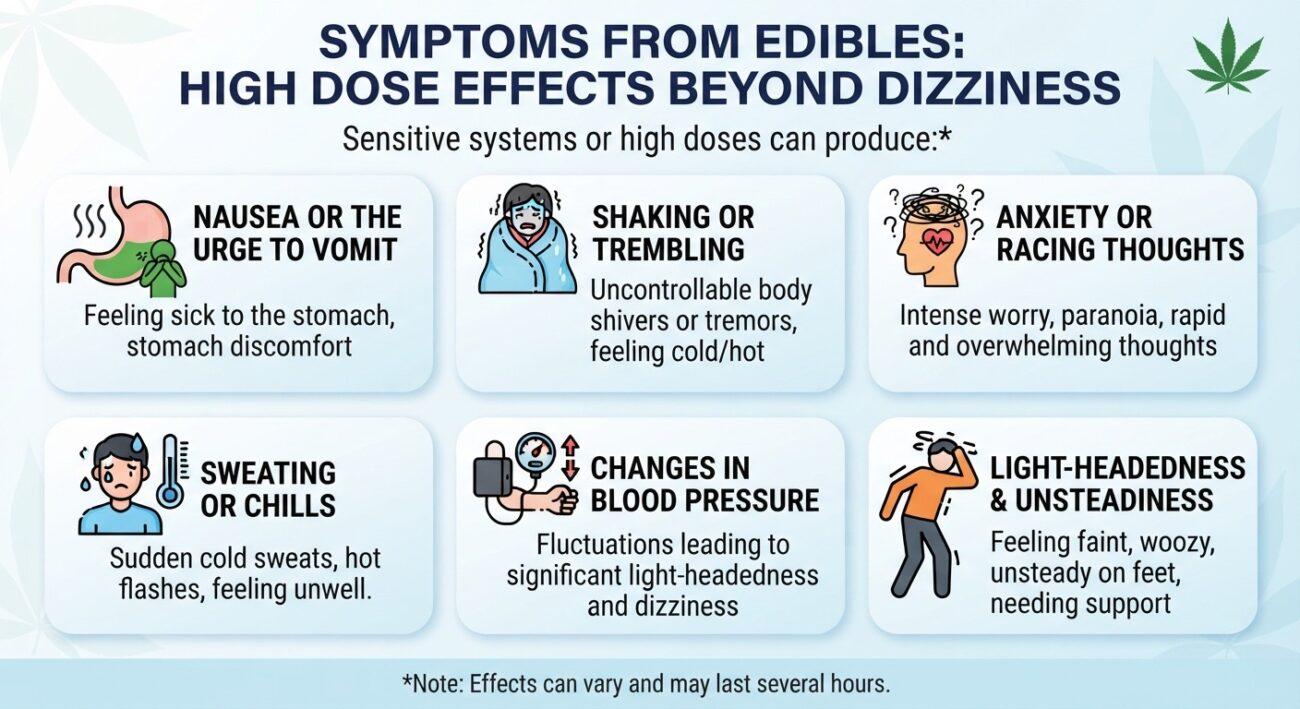
Beyond dizziness and nausea from edibles, high doses or sensitive systems can produce a range of temporary reactions:
- The Shakes — Mild trembling or heightened awareness of bodily sensations. Deep breathing and a calm environment usually help as the peak passes.
- The Pukes — Nausea can escalate to vomiting. This is the body’s way of clearing excess material. Rinse your mouth, rest, and avoid eating for a short period afterward. Persistent vomiting is a reason to seek medical help.
- Digestive upset — Some people experience diarrhea as the system flushes itself. Stay near a bathroom, sip fluids, and let the episode run its course.
- Anxiety or racing thoughts
- Sweating or chills
- Changes in blood pressure that contribute to light-headedness
- Dry mouth, red eyes, and altered perception of time
In most cases these symptoms are temporary. They stem from the body reacting to a large amount of psychoactive compounds rather than a permanent problem. A more detailed recovery roadmap appears in our article on how to recover from a bad edibles experience.
How Long Does Edible Nausea Last?
Most people feel significant improvement within 1–4 hours after the peak. Full resolution of nausea after edible use can take longer depending on dose, metabolism, and whether vomiting occurred. Noticeable effects from edibles often last 4–8 hours, with residual fatigue or mild fog sometimes lingering into the next day. Rest, hydration, and CBD typically shorten the uncomfortable window. If nausea from edibles remains severe or you cannot keep fluids down, seek medical attention. For general information on cannabis effects and duration, Health Canada provides an overview of cannabis health effects.
Can Edibles Make You Nauseous the Next Day?
Yes, in some cases. Because oral THC produces higher levels of the longer-lasting metabolite 11-hydroxy-THC, residual effects — including mild nausea, fatigue, or fogginess — can continue into the following day, especially after a high dose. This is less common with inhaled cannabis. Staying hydrated, eating lightly, and resting usually resolve next-day discomfort. True prolonged nausea the day after is uncommon in healthy adults but can occur with very large doses or in sensitive individuals.
Why Do Gummies Make Me Nauseous?
Gummies are one of the most common forms of cannabis edibles, so many people specifically ask “why do gummies make me nauseous.” The causes are the same as other edibles: delayed onset, conversion to stronger 11-hydroxy-THC, and the tendency to redose too soon. In addition, some gummies contain sugar alcohols, artificial sweeteners, or other additives that can independently upset the stomach. High sugar content on an empty stomach may also contribute. Starting with a low dose (2.5–5 mg THC), waiting a full two hours, and choosing lab-tested products with clear labeling reduces the chance of nausea from gummies.
Prevention Tips for Next Time
Most uncomfortable edible experiences are preventable with careful dosing and preparation:
- Start with a low dose (often 2.5–5 mg THC for new or sensitive users) and wait at least two full hours before considering more. Having a mild 10mg CBD full-spectrum gummies option ready can also help balance effects if the high starts to feel too intense.
- Eat a light, balanced meal beforehand rather than taking edibles on an empty stomach. A small amount of fat can aid absorption without dramatically delaying onset for most people.
- Note the specific product, dose, and how your body responds so you can adjust in the future. Lab-tested products with clear milligram labeling are essential; homemade or unlabeled edibles carry much higher risk of dose miscalculation.
- Have CBD, water, and a calm space ready before you dose. Knowing you have a plan reduces anticipatory anxiety.
- Avoid mixing with alcohol or other substances that lower blood pressure or impair judgment.
- If you take medications that affect blood pressure, heart rate, or liver enzymes, discuss cannabis use with a knowledgeable clinician first.
Edibles remain a convenient and potent way to experience cannabis. Explore a wide range of carefully dosed options in our cannabis edibles collection so you can choose products that match your tolerance and preferred onset. Understanding how your metabolism interacts with them, recognizing early warning signs, and knowing simple recovery steps turns an overwhelming moment into a manageable one. Public-health guidance from multiple jurisdictions consistently emphasizes “start low and go slow” precisely because of the delayed and variable nature of oral THC.
Learn More
Explore related guides on Haute Health for CBD products, edible options, and general cannabis education. For broader advice on managing an intense high from any form of cannabis, read what to do if you get too high. Always purchase lab-tested products from trusted sources. If symptoms feel severe, prolonged, or include chest pain, difficulty breathing, or loss of consciousness, seek emergency medical care.
Medical Disclaimer
This article is for general information only. It is not medical advice. Cannabis affects individuals differently. Consult a qualified healthcare provider before use, especially if you have existing health conditions, take medications, or are pregnant or nursing. Seek emergency care if symptoms feel severe or prolonged. Research on cannabinoid pharmacokinetics and cardiovascular effects continues to evolve; the information here reflects current understanding from peer-reviewed studies and clinical observations available at the time of writing.
Frequently Asked Questions
Q: Why do edibles make me nauseous?
A: Edibles convert THC into a stronger metabolite (11-hydroxy-THC) in the liver. This hits harder and lasts longer than smoking. High doses, delayed onset (leading people to redose), empty stomach, or individual metabolism differences commonly trigger nausea.
Q: When should I get medical help?
A: Seek medical help if you have severe or persistent vomiting and can’t keep fluids down, chest pain, difficulty breathing, extreme confusion, loss of consciousness, or symptoms that last many hours without improvement.
Q: Which cannabinoids may worsen nausea at high doses?
A: High amounts of THC are the primary driver of nausea and dizziness for most people. In sensitive individuals, other compounds in full-spectrum products can contribute, but THC remains the main factor. CBD generally works in the opposite direction and often reduces nausea.
Q: Does lying down or movement affect nausea relief?
A: Lying still in a quiet, dark room usually helps most. Sudden movement or visual stimulation can intensify dizziness. Gentle position changes are fine if needed, but avoid rapid standing or spinning motions until the intensity drops.
Q: Are OTC remedies safe to combine with THC?
A: Some over-the-counter options (such as ginger or certain anti-nausea aids) are commonly used, but interactions vary. Always check with a pharmacist or doctor before combining any medication with cannabis, especially if you take other prescriptions.
Q: How long does edible-induced nausea usually last?
A: Most people feel significant improvement within 1–4 hours after the peak. Full resolution can take longer depending on dose, metabolism, and whether vomiting occurred. Rest, hydration, and CBD typically shorten the uncomfortable window.
