
Contents [ Hide ]
- 1 Religious Roots of Psychedelics: History & Spirituality
- 2 Psychedelics in Ancient Religious Contexts
- 3 Psychedelics as Spiritual Enhancers
- 4 Comparison of Key Historical Psychedelic Traditions
- 5 Modern Continuity and Contemporary Spiritual Interest
- 6 Why the Historical Record Matters Today
- 7 Practical Reflections on Psychedelics and Spirituality
Religious Roots of Psychedelics: History & Spirituality
Psychedelics have deep roots in human culture that stretch far beyond modern recreational use. Across continents and centuries, communities have incorporated certain plants and fungi into ceremonies, healing practices, and spiritual exploration. Archaeological finds, ethnographic records, and chemical analysis of ancient remains show that substances containing psilocybin, mescaline, DMT-related compounds, and other psychoactive molecules were used in structured, often sacred contexts long before written history in many regions.
This article examines the religious and spiritual dimensions of psychedelics. It reviews evidence from Mesoamerica, the Andes, North America, and other areas. In addition, it discusses how these substances were framed as enhancers of insight rather than mere intoxicants. Finally, it considers why the topic remains relevant today. The goal is a clear, evidence-based overview rather than advocacy or speculation.
Why This History Still Matters
Many people today encounter psychedelics only through modern media or clinical headlines. Looking at the much older ceremonial record helps place current conversations in a longer human timeline. It also shows that questions about meaning, healing, and altered states are not new. Communities have been asking similar questions for thousands of years.
Psychedelics in Ancient Religious Contexts
Direct chemical evidence and iconography indicate that psychoactive plants and fungi were integrated into ritual life in multiple early societies. These uses were rarely casual. Surviving records and artifacts point toward carefully controlled settings. Specialists such as shamans, priests, or healers often guided the experiences.
Mesoamerican Traditions and Teonanácatl
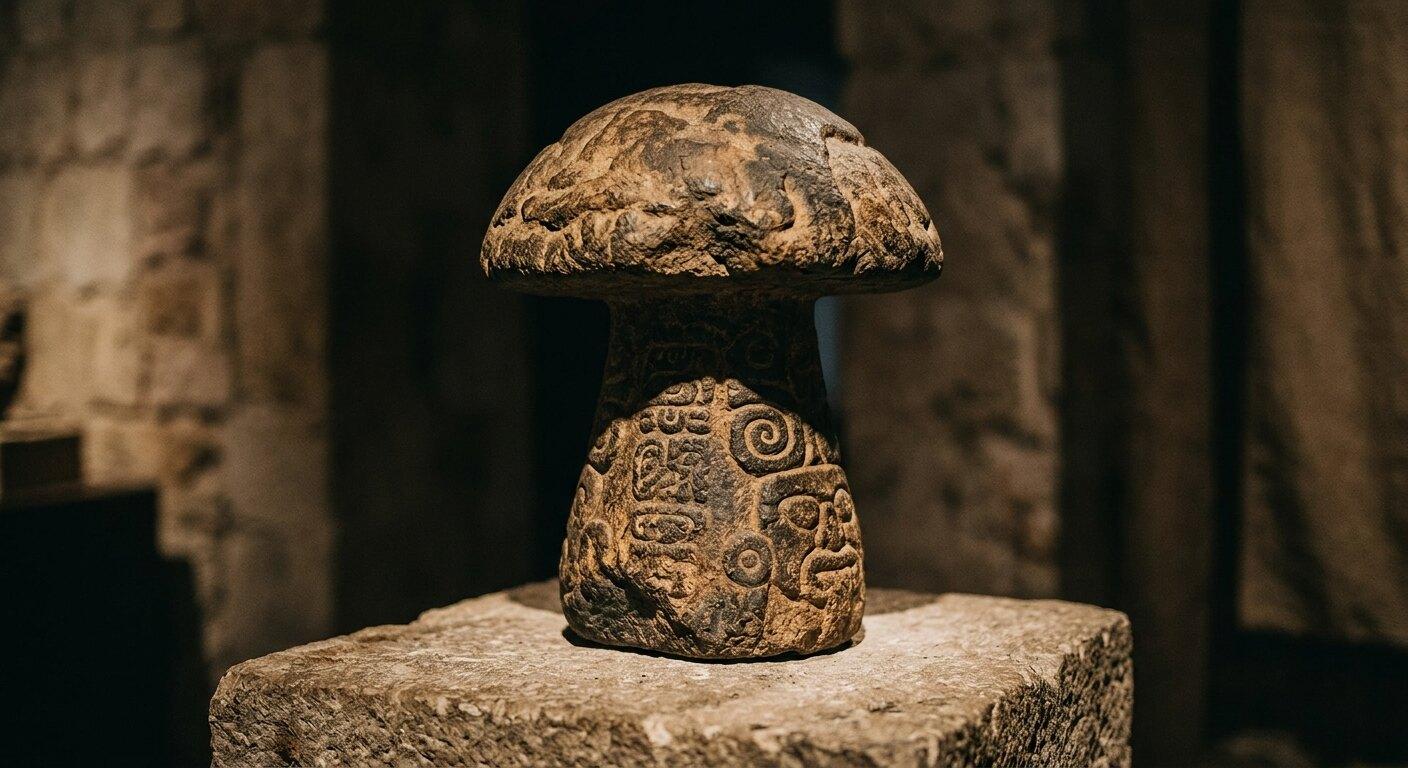
In Mesoamerica, psilocybin mushrooms held a documented place in religious life. Aztec sources refer to them as teonanácatl, often translated as “flesh of the gods.” Spanish colonial accounts describe their use in ceremonial contexts. Moreover, mushroom-shaped stone sculptures dating to roughly 1000 BCE have been found in highland Guatemala and neighboring regions. These objects, along with later ethnographic continuity among Mazatec and other communities, support the view that mushrooms were treated as sacred rather than recreational.
Readers interested in the broader history of the compound itself can explore our guide on what is psilocybin.
Peyote and North American Traditions
Peyote (Lophophora williamsii), which contains mescaline, provides some of the oldest direct chemical evidence of psychedelic plant use in North America. Specimens recovered from a Texas cave have been radiocarbon-dated to approximately 3700–3800 BCE. Researchers still detect measurable mescaline in these samples. Later Indigenous traditions, including the Native American Church, continued ceremonial use of peyote under legal protections that recognize its religious significance.
Andean and Amazonian Evidence
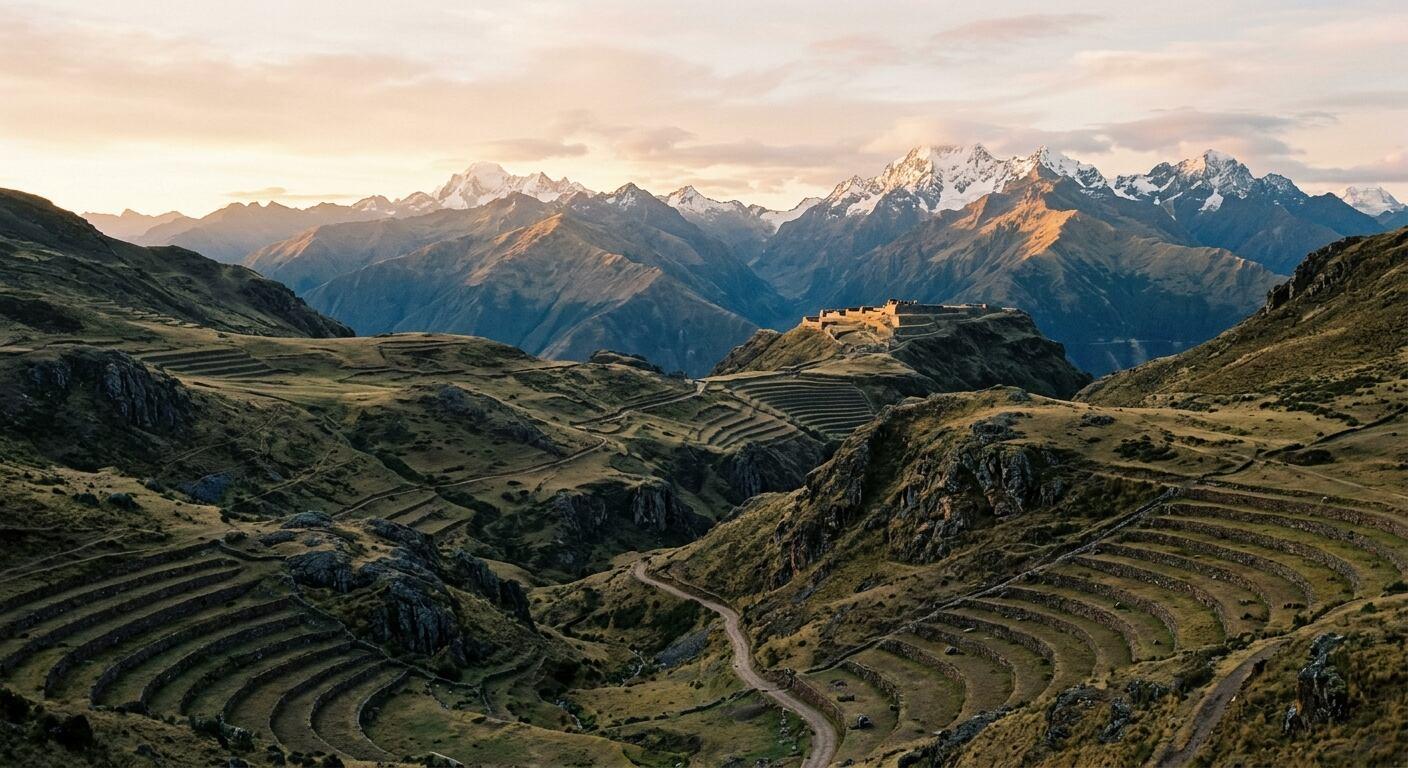
In the Andes and Amazon basin, multiple lines of evidence point to long-standing use of psychoactive plants. Chemical analysis of ritual bundles and hair samples from pre-Columbian contexts has detected compounds associated with ayahuasca ingredients (harmine and related alkaloids). In addition, researchers have identified other plants containing DMT-related substances. At sites such as Chavín de Huántar, bone tools show residues consistent with the preparation and inhalation of psychoactive materials. These finds suggest organized ceremonial use rather than isolated experimentation.
For a wider look at how different cultures have related to these fungi over time, you may also find our article on fun and odd facts about magic mushrooms helpful.
Psychedelics as Spiritual Enhancers
Across many of the traditions mentioned above, people framed psychedelic experiences as tools for contacting other realms, receiving guidance, healing, or strengthening community bonds. The substances themselves were not the goal. Instead, they served as means within larger ritual systems that included preparation, guidance, and integration.
Ego Dissolution and Expanded Perspective
One recurring theme in both historical accounts and modern research is the temporary softening of rigid self-boundaries. Participants often report reduced self-importance, greater feelings of connection, and shifts in emotional perspective. In clinical research settings, scientists sometimes discuss this phenomenon as “ego dissolution.” While modern studies examine it in the context of mental-health applications, similar language appears in older ethnographic descriptions of ceremonial experiences. For background on contemporary scientific interest, see our overview of what magic mushrooms do to the mind and body.
Set, Setting, and Intention
Historical practices rarely treated psychedelics as isolated chemical events. Ceremonies typically involved preparation, specific locations, songs or prayers, and post-experience discussion. Modern researchers emphasize the same variables—set (mindset), setting (environment), and intention—when studying outcomes. This continuity underscores that context shapes experience as much as the substance itself.
The Role of Community and Guidance
In most documented historical settings, individuals did not use these substances alone. Experienced guides, elders, or ritual specialists helped shape the experience and supported participants afterward. This communal framework reduced the chance of isolation and helped people integrate what they encountered. Modern discussions of safety often return to the same principle: supportive context matters.
Comparison of Key Historical Psychedelic Traditions
| Region / Tradition | Primary Substance(s) | Approximate Earliest Evidence | Primary Context |
|---|---|---|---|
| Mesoamerica (Aztec, Maya, Mazatec) | Psilocybin mushrooms (teonanácatl) | Mushroom stones ~1000 BCE; colonial accounts | Ceremonial, divinatory, healing |
| North America (Texas cave & later Native American Church) | Peyote (mescaline) | ~3700–3800 BCE (chemical confirmation) | Ritual and later religious sacrament |
| Andes / Amazon | Ayahuasca ingredients, vilca, other DMT-related plants | Pre-Columbian ritual bundles & residues | Shamanic and ceremonial |
| Sahara (Tassili rock art) | Possible psilocybin mushrooms | Cave paintings ~7000–9000 years ago | Iconographic; interpretation debated |
| Modern syncretic churches | Ayahuasca, peyote | 20th century onward (legal recognition varies) | Organized religious sacrament |
The table summarizes major examples. Dates and interpretations continue to be refined as new analyses appear. For additional cultural context, see our collection of fun and odd facts about magic mushrooms.
What the Table Reveals
Looking across regions, a clear pattern emerges. These substances were almost always embedded in larger social and spiritual systems. They were rarely treated as casual tools. The table also shows how far back some of the chemical evidence reaches, which helps counter the idea that psychedelic use is only a recent phenomenon.
Modern Continuity and Contemporary Spiritual Interest
Several living traditions maintain ceremonial use of psychedelics under legal or semi-legal frameworks. The Native American Church in the United States and Canada has long defended peyote as a sacrament. In Brazil and elsewhere, churches such as Santo Daime and União do Vegetal incorporate ayahuasca into structured religious services. These groups illustrate that organized religious use did not disappear with colonization or modern drug laws.
Personal Spiritual Exploration Today
Outside formal religious settings, some individuals explore psychedelics in personal spiritual contexts. Microdosing, for example, is sometimes described as a low-intensity way to support mood, creativity, or a sense of connection without full visionary effects. Our guide on what is microdosing outlines practical and research perspectives on this approach.
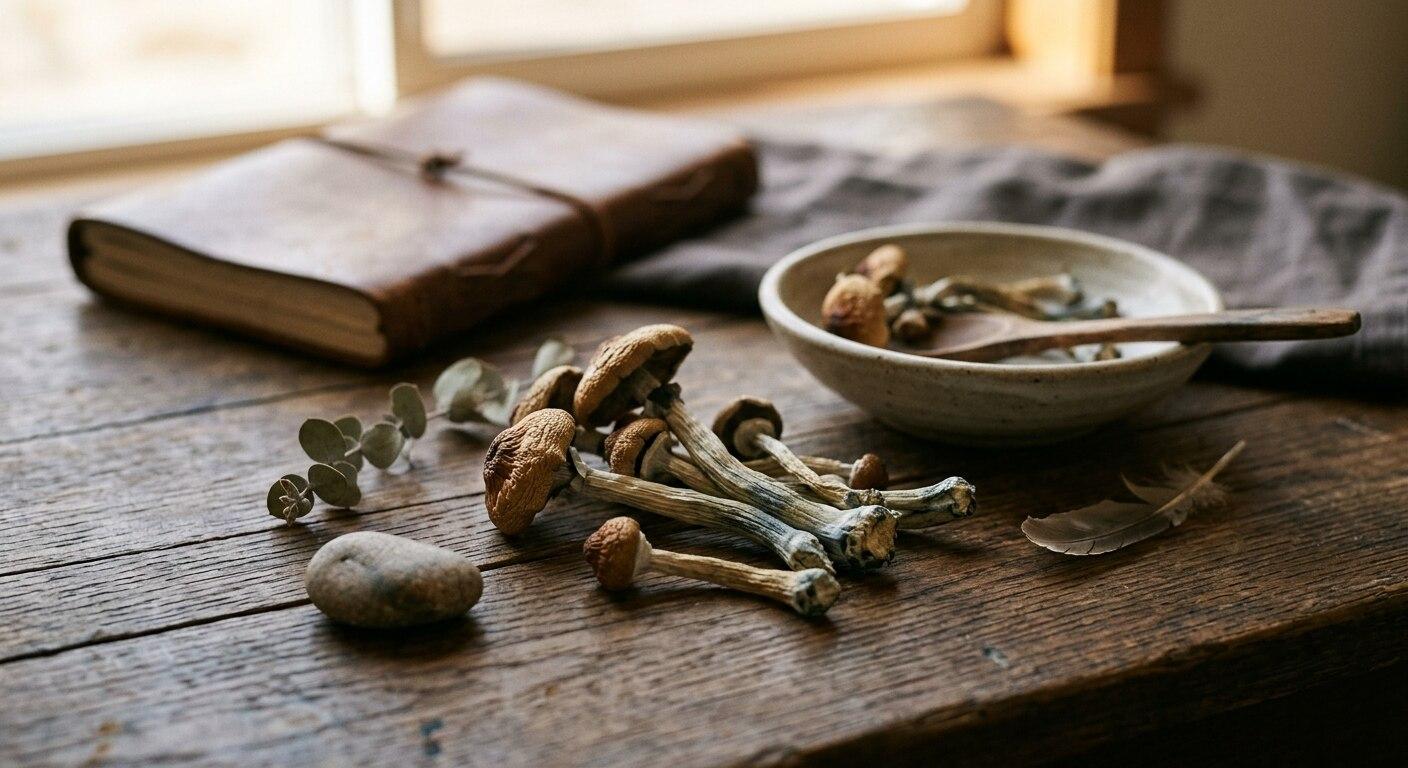
Many people who approach these substances today emphasize intention and careful preparation. They often study historical practices to better understand the importance of context. As a result, contemporary discussions frequently return to the same principles that guided earlier ceremonial use.
For those curious about how different strains have been described in modern spiritual and exploratory settings, our page on Golden Teachers mushrooms offers additional educational context within a Canadian framework.
Why the Historical Record Matters Today
Understanding the religious roots of psychedelics helps correct two common distortions. One is the idea that these substances are purely modern inventions of counterculture. The other is the opposite claim that every ancient use was identical to current clinical or recreational practice. Both oversimplify a complex picture.
Lessons from Archaeology and Ethnography
Archaeological and ethnographic evidence shows long, culturally embedded traditions. At the same time, modern clinical research operates under different ethical standards, dosing protocols, and safety requirements. Historical use does not automatically justify contemporary self-experimentation. Likewise, modern stigma does not erase the older ceremonial record.
For readers interested in the Canadian regulatory context surrounding these substances, official information is available from Health Canada’s page on magic mushrooms. Additional scholarly overviews of the archaeological record can be found through academic sources on entheogenic drugs and the archaeological record.
Those exploring educational resources on related plant medicines within a Canadian framework may also find value in our Golden Teachers mushrooms page and related educational posts, always understood within applicable law.
A useful external overview of the wider archaeological evidence can also be found on the Wikipedia page on entheogenic drugs and the archaeological record, which summarizes many of the key finds discussed above.
Kinoko Microdose Mushroom Capsules (5000mg)
Practical Reflections on Psychedelics and Spirituality
Historical practices emphasize preparation, guidance, and integration. Modern discussions that ignore these elements risk repeating the same mistakes that led to both over-enthusiasm and over-restriction. Whether someone approaches the topic from a religious, spiritual, scientific, or purely historical angle, the record shows that psychedelics have been treated as powerful tools requiring respect rather than casual commodities.
Balancing Curiosity and Caution
The religious roots of psychedelics are real and well-documented in multiple regions. They form part of a broader human history of seeking meaning, healing, and connection. Studying that history carefully can inform more nuanced conversations about these substances today. In addition, it encourages humility about what we still do not know.
Looking ahead, continued archaeological work and respectful engagement with living traditions will further refine our understanding. The deeper the historical record becomes, the clearer it is that psychedelics have long occupied a complex place in human spiritual life.
Continuing the Conversation
New chemical analyses and careful ethnographic work continue to appear each year. As researchers refine dating methods and identify additional residues, the picture of ancient use becomes more detailed. At the same time, living ceremonial communities keep their own knowledge systems alive. Both streams of information help keep the discussion grounded.
Frequently Asked Questions
Q: Have psychedelics been used in religion for a long time?
A: Yes. Archaeological and ethnographic evidence documents ceremonial use of psilocybin mushrooms, peyote, ayahuasca ingredients, and related plants across Mesoamerica, the Andes, North America, and other regions. In some cases this use dates back thousands of years.
Q: What is teonanácatl?
A: Teonanácatl is a Nahuatl term used by the Aztecs for certain psilocybin mushrooms. People often translate it as “flesh of the gods.” Colonial accounts and later ethnographic work confirm their ceremonial importance.
Q: Is there scientific evidence of ancient psychedelic use?
A: Yes. Chemical analysis has confirmed mescaline in peyote samples more than 5,000 years old. Researchers have also found ayahuasca-related alkaloids in pre-Columbian ritual materials and residues on tools from Andean ceremonial sites. Iconography and ethnohistoric records provide additional support.
Q: Do modern religions still use psychedelics?
A: Some do. The Native American Church uses peyote as a sacrament in the United States and Canada. Brazilian churches such as Santo Daime and União do Vegetal incorporate ayahuasca into formal religious services under specific legal frameworks.
Q: How does historical use relate to modern microdosing?
A: Historical ceremonial use typically involved full doses in structured ritual settings. Microdosing is a modern, low-dose practice aimed at subtle effects without strong perceptual changes. The two approaches differ significantly in dose, setting, and intention.
Q: Where can I learn more about the science and history?
A: Reliable starting points include peer-reviewed archaeological literature, Health Canada’s official pages on controlled substances, and educational resources that clearly separate historical fact from speculation. Our related guides on psilocybin history and effects provide additional accessible overviews.
