
Contents [ Hide ]
- 1 Why Psychedelics Might Be the Next Cannabis
- 2 Is Cannabis a Psychedelic Substance?
- 3 Shared Histories of Cannabis and Psychedelics
- 4 Medical Interest in Psychedelics Compared with Cannabis
- 5 Key Differences Between Cannabis and Classic Psychedelics
- 6 Why Psychedelics Are Often Called the Next Cannabis
- 7 What Realistic Progress Looks Like for Psychedelics
- 8 Practical Takeaways on Psychedelics and Cannabis
Why Psychedelics Might Be the Next Cannabis
Canada legalized cannabis federally in 2018. As a result, the plant moved from prohibited status into a regulated market for both medical and adult recreational use. Over several decades, advocacy, research, court challenges, and shifting public opinion made this change possible. Meanwhile, a parallel conversation is now underway around psychedelics, particularly psilocybin.
Researchers, clinicians, and patients are asking whether compounds once dismissed as dangerous might follow a similar path toward regulated medical access. Although the comparison between psychedelics and cannabis is useful, it remains imperfect. Cannabis and classic psychedelics act through different biological systems, produce different experiences, and face different regulatory hurdles. Understanding both the similarities in their social histories and the clear pharmacological differences therefore helps clarify what “the next cannabis” could realistically mean for psychedelics in Canada.
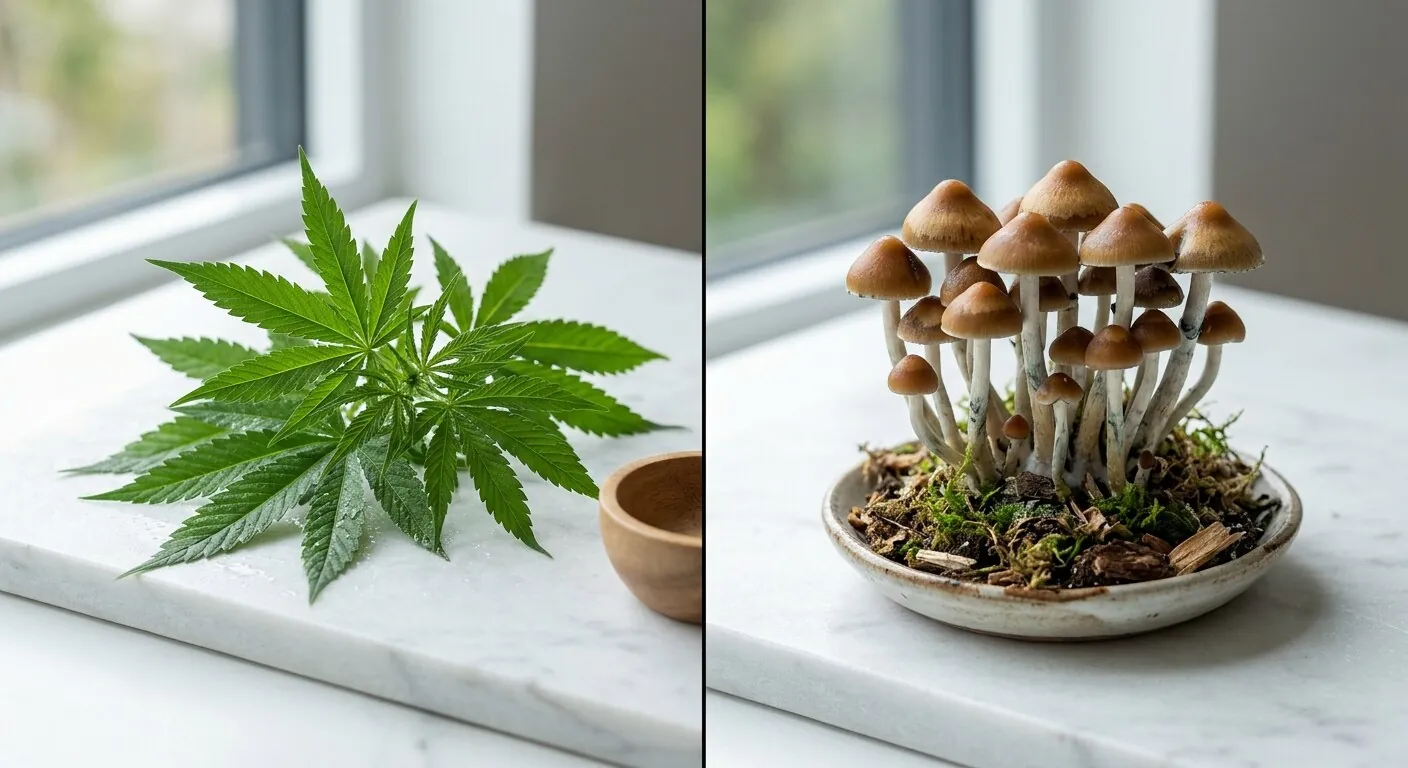
Is Cannabis a Psychedelic Substance?
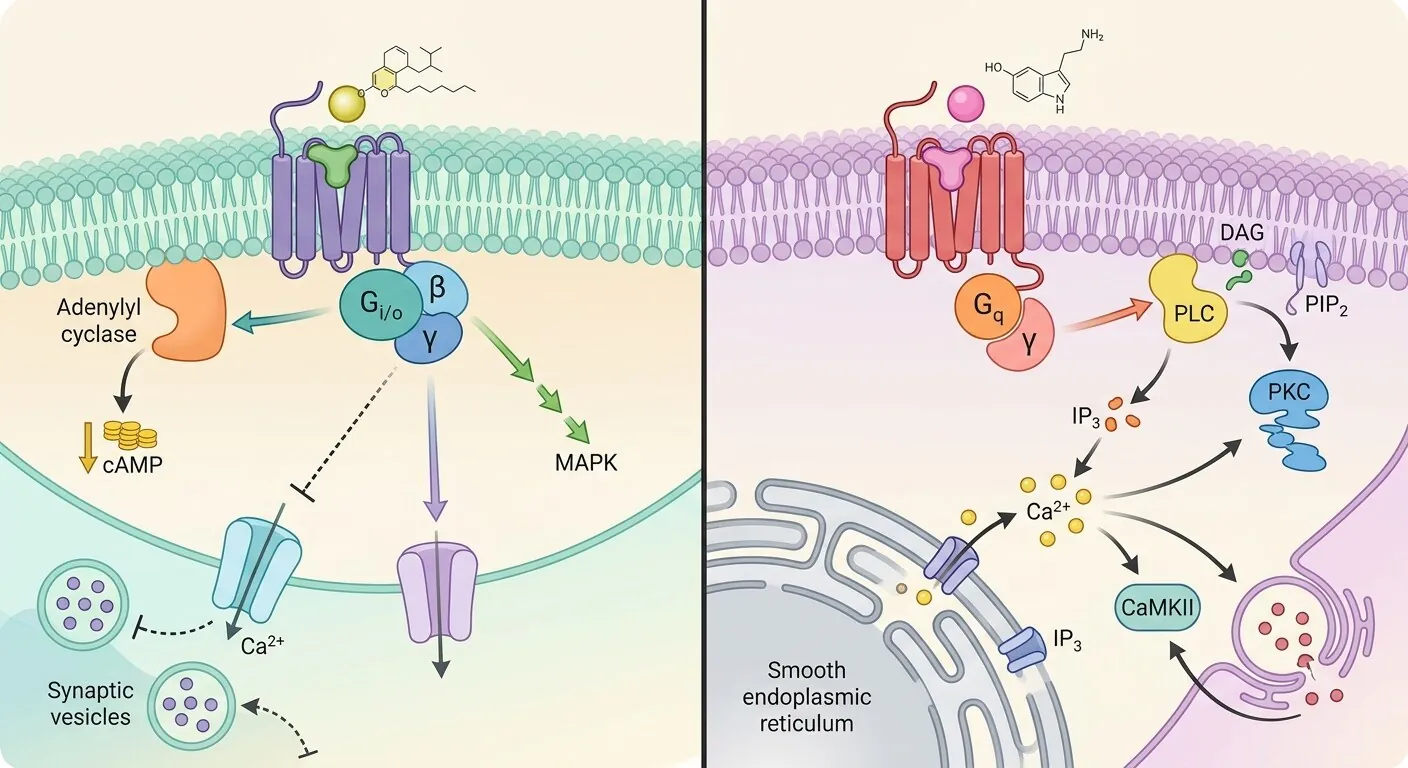
The short scientific answer is no. Classic psychedelics such as psilocybin, LSD, and DMT primarily activate the serotonin 5-HT2A receptor. That receptor activity is central to the characteristic alterations in perception, sense of self, and meaning that define the classic psychedelic experience. Cannabis, by contrast, works mainly through the endocannabinoid system. Its primary psychoactive compound, THC, binds to CB1 receptors and produces effects that are typically milder, shorter, and more variable in intensity.
Overlapping Effects Between Cannabis and Psychedelics
High doses of THC, especially in edible or concentrate form, can produce perceptual changes, altered time sense, and heightened emotion. In some people these experiences feel psychedelic-like. Recent pilot research has explored these overlaps on standard altered-state questionnaires. Even so, most researchers and clinicians continue to classify cannabis separately because the underlying receptor mechanisms and overall profile differ. For a closer look at this distinction, see our earlier discussion of whether weed is considered psychedelic.
Why the Difference Matters for Policy
Because the mechanisms diverge, the risk profiles, duration, and therapeutic applications also diverge. Cannabis effects are often described as more controllable and shorter-lived. Classic psychedelic sessions typically last longer and can involve more profound shifts in perspective. Both substances require respect for set, setting, and dose. Neither is risk-free. Readers interested in how the two can interact may find our guide on mixing cannabis and magic mushrooms useful.
Shared Histories of Cannabis and Psychedelics
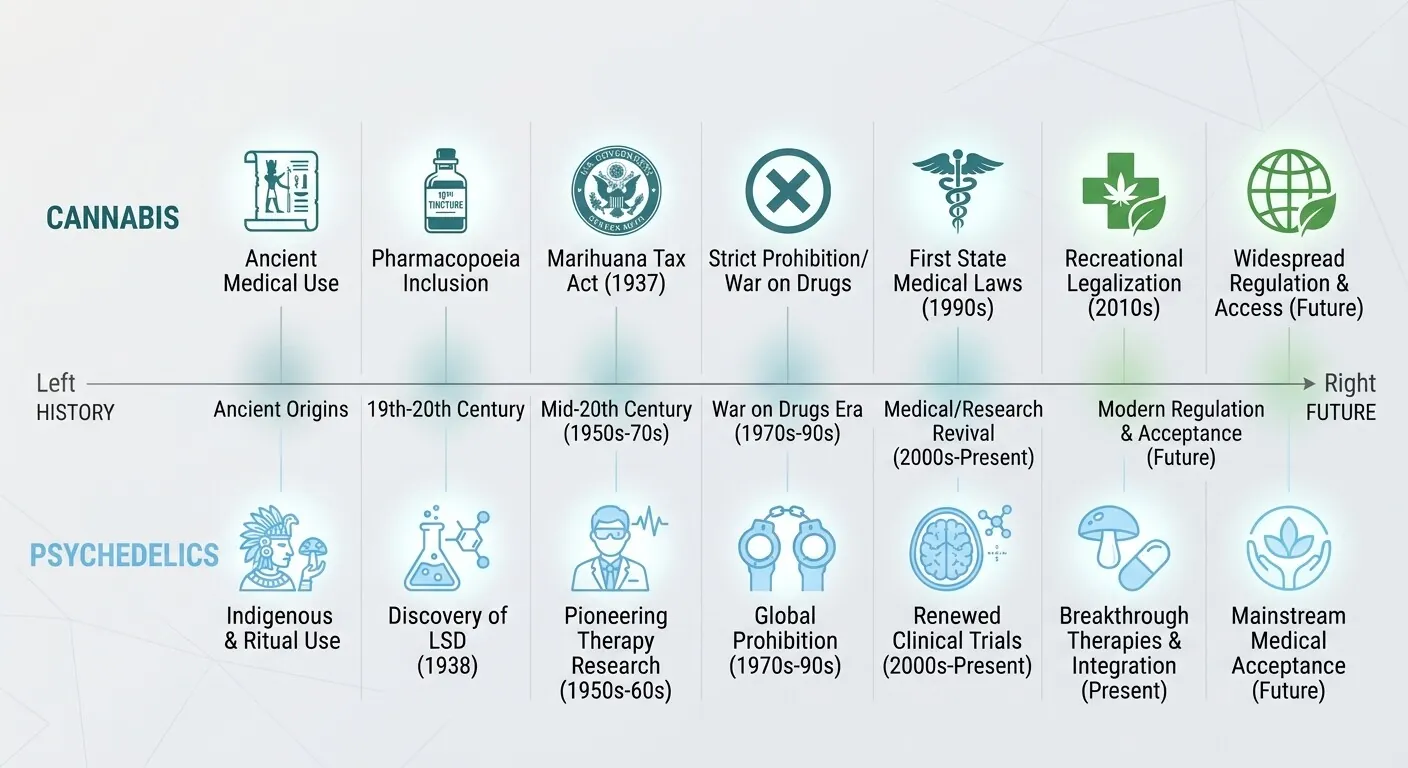
Both cannabis and many psychedelic plants and fungi have deep historical roots in human culture. Indigenous traditions across the Americas used psilocybin mushrooms, peyote, and other entheogens in ceremonial and healing contexts for centuries. Cannabis likewise has a long record of medical, ritual, and practical use. In the twentieth century both categories were swept into restrictive drug-control regimes.
How Cannabis Reached Legalization in Canada
Canada prohibited cannabis in the 1920s. Decades of enforcement, underground markets, and gradual medical exemptions followed. Court decisions, public opinion shifts, and the 2018 Cannabis Act ultimately created a legal framework for regulated production, sale, and adult possession. The transition was neither instant nor perfect. However, it demonstrated that a G7 country could move a previously illicit plant into a controlled legal market.
LA Kush Cake Strain Flower – Hybrid
Current Legal Status of Psychedelics in Canada
Psilocybin and related compounds remain controlled under the Controlled Drugs and Substances Act. Production, sale, and possession outside authorized channels are illegal. Limited legal pathways exist through clinical trials and Health Canada’s Special Access Program for patients with serious or life-threatening conditions when conventional treatments are unsuitable. These routes require practitioner involvement and case-by-case authorization.
Medical Interest in Psychedelics Compared with Cannabis
Interest in psychedelic-assisted therapy has grown substantially in recent years. Clinical research has examined psilocybin for treatment-resistant depression, anxiety related to serious illness, and other mental-health conditions. Results from carefully designed trials have been encouraging enough to support continued investigation. Large-scale, long-term data and full regulatory approvals are still evolving. Cannabis, by comparison, already has an established medical evidence base for certain symptoms such as chronic pain, nausea, and spasticity.

500mg CBD Full Spectrum Tincture (30ml)
How Patients Currently Access Psychedelics
In Canada, most patients seeking legal psilocybin access do so through the Special Access Program or authorized clinical trials. Approval numbers have fluctuated, and the process can be time-consuming. A private member’s bill introduced in 2026 (Bill C-286) aimed to create a clearer prescribing pathway for medical psilocybin. As of late 2026 it had received only first reading and had not become law. The situation remains fluid and continues to develop.
Readers seeking educational background on the compounds themselves can explore our guides on what is psilocybin and what magic mushrooms do to the mind and body.

Key Differences Between Cannabis and Classic Psychedelics
| Factor | Cannabis | Classic Psychedelics (e.g., Psilocybin) |
|---|---|---|
| Primary mechanism | Endocannabinoid system (CB1/CB2) | Serotonin 5-HT2A receptor |
| Typical duration | Hours (shorter for inhaled, longer for edibles) | Often 4–8+ hours for full sessions |
| Legal status in Canada (2026) | Federally legal for adults under regulated framework | Controlled; limited medical access via SAP/trials |
| Common medical research focus | Pain, nausea, spasticity, sleep, appetite | Depression, anxiety, PTSD, end-of-life distress |
| Recreational market | Established licensed retail and mail-order options | No legal recreational market |
| Dose sensitivity | Wide range; tolerance develops with regular use | Strong effects at relatively low doses; tolerance resets more quickly |
This table summarizes broad patterns. Individual responses vary, and neither category is monolithic. For a side-by-side look at everyday experience differences, see our article on the differences between shrooms and weed.
Why Psychedelics Are Often Called the Next Cannabis
Several factors keep the comparison alive. Both substances were heavily stigmatized for decades. Both have long cultural histories of human use. Public opinion has shifted toward greater openness to evidence-based drug policy. Canada’s cannabis experience showed that careful regulation is possible. Advocates hope a similarly pragmatic approach can eventually apply to psychedelics under medical supervision.
Important Limitations of the Comparison
Psychedelics are not simply “cannabis but stronger.” The intensity, duration, and psychological depth of a classic psychedelic session place higher demands on preparation, screening, support, and integration. Regulatory systems designed for cannabis cannot be copied wholesale. Any future medical framework would need its own safeguards, training standards, and quality controls. Microdosing discussions, while popular, also require careful separation of anecdote from controlled evidence. Our overview of what is microdosing covers the practical and research context in more detail.
What Realistic Progress Looks Like for Psychedelics
In the near term, the most plausible path for psychedelics in Canada is expanded, carefully regulated medical access rather than broad recreational legalization. Clinical trials continue across multiple institutions. The Special Access Program remains the main real-world route for eligible patients. Provincial initiatives and professional guidelines are slowly clarifying the roles of different practitioners. International research, particularly in the United States, Australia, and parts of Europe, influences Canadian discussion even when domestic policy moves more cautiously.
Patients and families interested in legal options should work with qualified healthcare providers familiar with current Health Canada pathways. Self-experimentation outside authorized channels carries both legal and safety risks. For those exploring educational resources on related plant medicines within a Canadian context, our Golden Teachers mushrooms product page and broader mushroom category offer additional reading points, always within applicable law.
Authoritative external sources for ongoing updates include the Health Canada magic mushrooms information page and peer-reviewed research published in journals such as those indexed by PubMed. Policy trackers maintained by independent legal and research groups also provide useful summaries of legislative and regulatory developments.
Practical Takeaways on Psychedelics and Cannabis
Cannabis demonstrated that public attitudes and scientific evidence can eventually reshape policy. Psychedelics are earlier in a comparable journey. The pharmacological differences are real and consequential. Medical interest is genuine and growing, yet access remains tightly controlled. Anyone considering either substance should prioritize accurate information, legal pathways where they exist, and personal safety.
The question is not whether psychedelics will become identical to cannabis. Instead, the more useful question is whether carefully designed systems can make evidence-based, supervised use available to people who may benefit while minimizing harm. That conversation is still unfolding in Canada and elsewhere.
Looking ahead, continued research, clearer regulatory pathways, and open public discussion will shape the next chapter. Cannabis opened one door. Psychedelics may eventually open another, but only if evidence, safety, and careful policy design remain at the center of the process.
Frequently Asked Questions
Q: Is cannabis considered a psychedelic?
A: No. Classic psychedelics act primarily on the 5-HT2A serotonin receptor. Cannabis acts mainly through the endocannabinoid system. High doses of THC can produce some overlapping subjective effects in some people, but the substances are classified separately.
Q: Are psychedelics legal in Canada?
A: Psilocybin remains a controlled substance. Limited legal access exists for eligible patients through Health Canada’s Special Access Program and authorized clinical trials. Recreational production, sale and possession remain illegal.
Q: What is the Special Access Program?
A: It is a Health Canada pathway that allows practitioners to request unapproved drugs, including psilocybin in certain cases, for patients with serious or life-threatening conditions when other options are unsuitable or unavailable.
Q: How does the medical evidence for psilocybin compare with cannabis?
A: Cannabis has a longer history of regulated medical use and a broader range of approved or commonly accepted symptom-management applications. Psilocybin research is more recent and focused on specific mental-health indications; larger and longer-term studies are still needed.
Q: Could psychedelics be legalized recreationally like cannabis?
A: Broad recreational legalization is not currently on the federal agenda. Most policy discussion centers on medical and research access with strong safeguards. Any future changes would require new legislation and extensive regulatory design.
Q: Where can I find reliable information on current rules?
A: Start with official Health Canada pages on controlled substances and the Special Access Program. Peer-reviewed journals and established research institutions provide the scientific context. Educational content on sites such as Haute Health can supplement but does not replace professional or legal advice.
